History
History of Sarasota
From a small bayfront settlement to a cultural destination shaped by land booms, barrier islands, and the legacy of John Ringling, Sarasota’s story is woven through its neighborhoods, waterfront, and historic landmarks.
Founding
From Bayfront Outpost to Gulf Coast City
Long before Sarasota became a destination, the area was home to Indigenous peoples who lived along the bay and barrier islands, relying on the rich coastal environment for food, trade, and travel. In the nineteenth century, settlers arrived along Sarasota Bay, drawn by fishing grounds, mild winters, and access to the Gulf. Early homesteads and small commercial activity gradually formed the roots of a permanent community.
By the late 1800s and early 1900s, Sarasota began to grow as transportation improved and Florida land development accelerated. New residents, investors, and winter visitors helped transform the settlement into a town with schools, churches, businesses, and civic institutions. The bayfront, downtown streets, and nearby keys all played a role in shaping the area’s identity as both a working coastal community and a place of leisure.
Sarasota grew by balancing natural beauty, ambitious development, and a strong cultural spirit that still defines the city today.
Sarasota Heritage
That balance became even more visible during the Florida land boom, when new neighborhoods, hotels, and public spaces expanded the city’s footprint. Over time, Sarasota developed a reputation not only for beaches and warm weather, but also for architecture, the arts, and a distinctive sense of place tied to the water.
Ringling Era
John Ringling’s Lasting Influence
Few figures shaped Sarasota more dramatically than John Ringling, the circus magnate who chose the city as a winter home and investment center in the 1920s. Through his vision, Sarasota gained new prominence as a place of elegance, entertainment, and architectural ambition. Ringling invested heavily in real estate, development, and cultural institutions, helping move Sarasota from a modest coastal town into a city with national visibility.
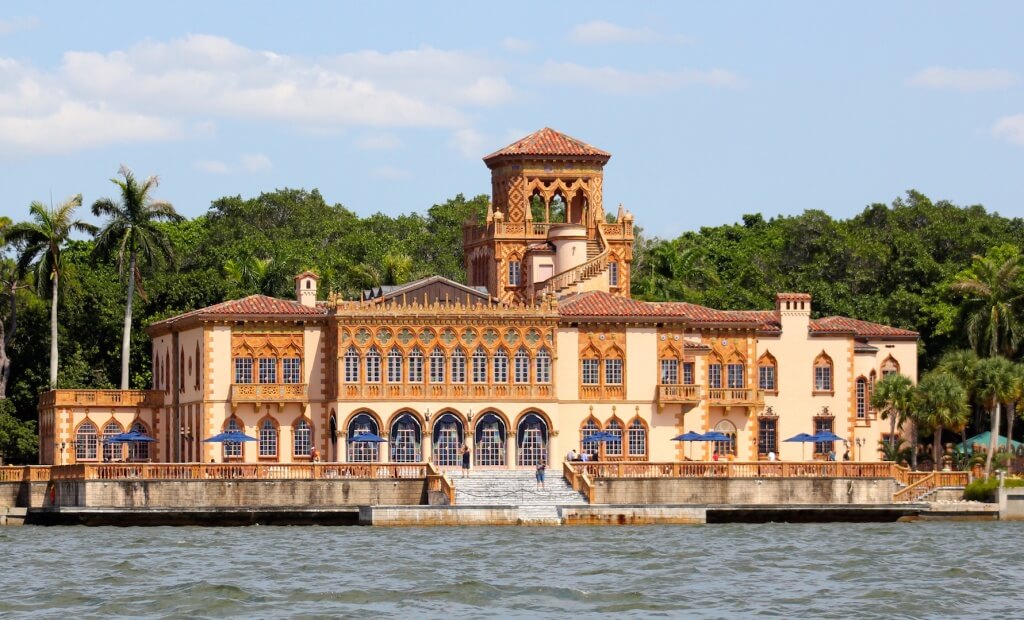
His legacy is most visible at The Ringling, the museum campus that includes the John and Mable Ringling Museum of Art, the spectacular Ca’ d’Zan mansion on Sarasota Bay, and the historic Circus Museum. Together, these sites preserve the story of the American circus while also reflecting the wealth, taste, and global influences that Ringling brought to Sarasota. Even today, the city’s identity as an arts destination owes much to the momentum created during this period.
Historic Sites Around the City and Keys
Sarasota’s history can still be explored through landmarks that connect visitors to the city’s civic, cultural, and coastal past. Downtown preserves important buildings from the early twentieth century, while the barrier islands reveal how beach communities evolved from quiet outposts into beloved destinations.
Next Stop
Keep Exploring Sarasota
Continue from Sarasota’s past into its present-day neighborhoods, waterfront districts, dining spots, and cultural highlights.