If you’ve spent any time researching a Gulf Coast vacation, you’ve probably run into the claim before you ever booked a flight: Siesta Key has the best beach in America. It sounds like the kind of thing every beach town says about itself. The difference is that Siesta Key actually has the hardware to prove it, and the recognition keeps stacking up year after year, from national outlets to international panels of travel professionals. So what’s actually going on here, and does the hype survive contact with an actual day at the beach? Short answer: yes. Here’s why, and how to plan around it.
The Sand Really Is Different
Every “why is Siesta Key so good” article eventually lands on the same explanation, because it happens to be true: the sand. Siesta Beach is made of roughly 99% pure quartz crystal, washed down from the Appalachian Mountains over millions of years and deposited along this stretch of the Gulf Coast. Most beach sand is a grab bag of crushed shell, coral fragments, and whatever sediment happens to be nearby. Siesta Key’s sand is something closer to geological purity, and that composition changes the actual physical experience of the beach in ways you can feel with your feet.
Quartz reflects heat rather than absorbing it, which is why the sand stays cool to the touch even at 2pm in August, when asphalt a few miles away is hot enough to fry an egg. It’s also unusually fine and powdery, closer to the texture of sugar or flour than the coarser, shell-flecked sand you’ll find on beaches just a few miles north or south. Locals will tell you the difference is noticeable within a mile radius, and they’re right. Move to Crescent Beach or Turtle Beach, and the sand composition already starts to shift.
The Awards Aren’t a Fluke
Siesta Beach isn’t riding on decades-old reputation. Recent recognition includes a No. 1 U.S. ranking in U.S. News & World Report’s Best Vacations rankings and a top American spot on TripAdvisor’s Travelers’ Choice Awards, alongside a No. 7 ranking in North America and a global top-30 finish on the World’s 50 Best Beaches list, one of the only U.S. beaches to crack that international ranking at all. The panel behind that global list weighs criteria like water clarity, wildlife, how developed or overrun a beach feels, and the odds of getting an objectively perfect beach day. Siesta Beach scores well across all of it, not just the sand.
None of this is new, either. The beach picked up Dr. Beach’s “Best Beach in America” honor twice in the 2010s, and it has bounced around the top of various rankings for the better part of four decades. Rankings come and go and methodologies shift, but Siesta Key keeps showing up near the top of nearly all of them, which says more than any single award does.
Siesta Beach vs. Crescent Beach: They’re Not the Same Beach
Here’s something a lot of first-time visitors miss: “Siesta Key Beach” and “Crescent Beach” are technically two different stretches of the same barrier island, and they have noticeably different personalities.
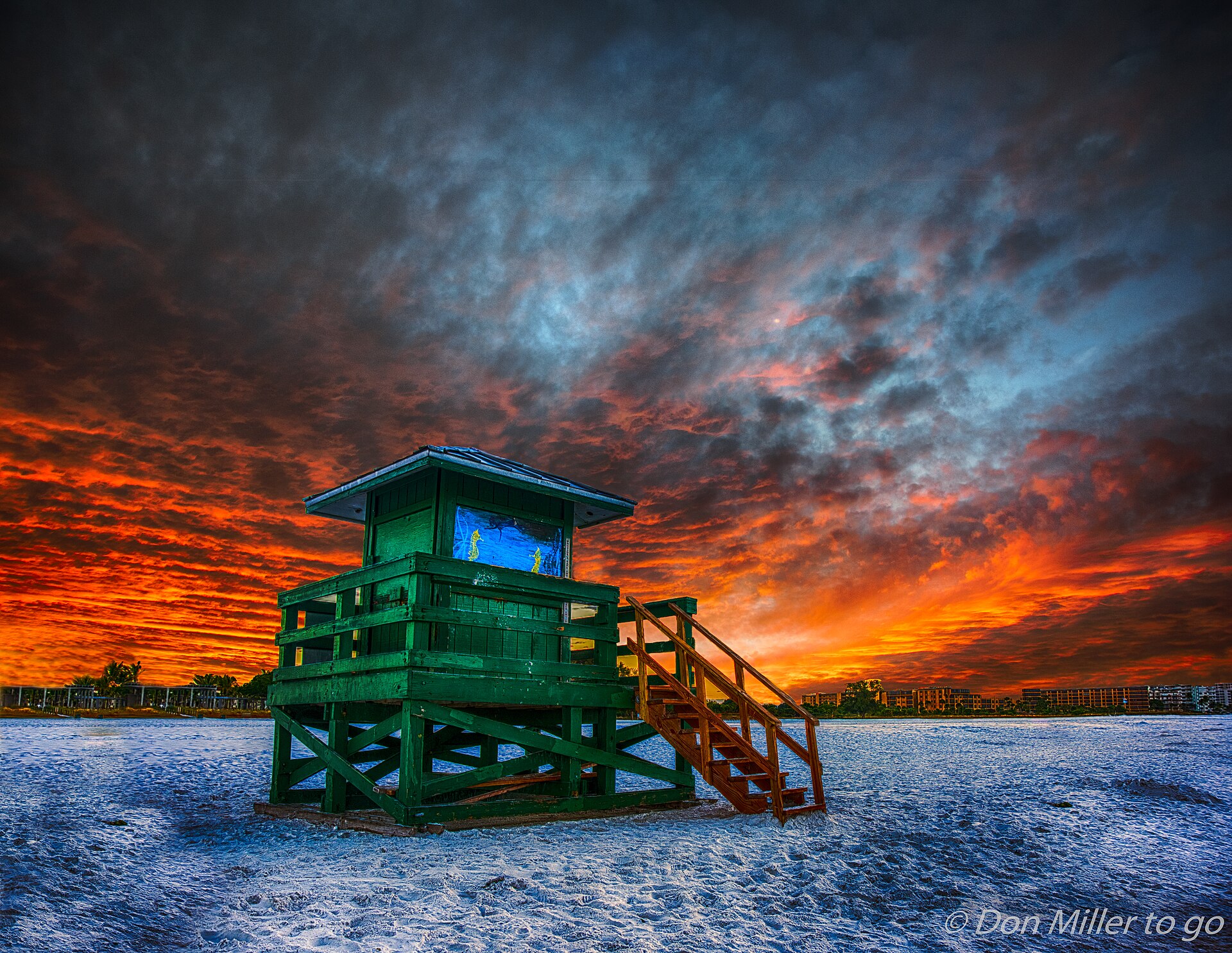
Siesta Beach (sometimes called the main beach or Siesta Public Beach) is the one with the crowds, the concessions, the volleyball courts, and the big parking lot off Beach Road. This is where the drum circle happens on Sunday nights, and it’s the section that shows up in most of the national rankings. It’s wide, well-maintained, and built for a full day out — bring the cooler, the umbrella, and the beach games.
Crescent Beach, just south of the main pavilion, is quieter, narrower in spots, and generally a better pick if you want a calmer stretch of sand without giving up the same quartz sand and clear water. It’s popular with people staying at the resorts and condos along that stretch of Midnight Pass Road, and it tends to have a more residential, low-key feel. Both offer the same great sunset views over the Gulf.
If you’re staying in the area for more than a day, it’s worth visiting both. Crowded, high-energy Siesta Beach for the classic experience and the drum circle; Crescent Beach for the quieter morning walk or a low-key afternoon.
Planning Your Beach Day
- Parking. This is the single biggest logistics question for Siesta Beach, and the honest answer is: get there early. The main lot fills up by mid-morning on weekends and during peak season (roughly November through April), and overflow parking on side streets goes fast too. If you’re staying elsewhere on the key, the free Siesta Key trolley is a genuinely good option — it runs regularly between the Village, the public beach, and points further south, so you can skip the parking hunt entirely.
- Amenities. Siesta Beach has restrooms, outdoor showers, a playground, volleyball courts, concession stands, and a pavilion. Crescent Beach has fewer facilities, so plan accordingly if you’re heading there for the day.
- Best time of day. Early morning (before 9am) gives you a nearly empty beach and the softest light for photos. Midday is peak crowd and peak heat, though the quartz sand helps more than you’d expect. Late afternoon into evening is prime time — the crowd thins slightly, the light turns gold, and if it’s a Sunday, the drum circle starts forming about an hour before sunset just south of the main pavilion.
- Water conditions. The Gulf here is famously calm and shallow for a long way out, which is part of why Siesta Beach scores so well with families. The bottom is sandy rather than rocky, entry is easy, and there’s rarely the kind of surf you’d find on an Atlantic-facing beach.
See It From the Water, Not Just the Sand
Here’s the thing almost nobody tells you in a standard “Siesta Key Beach” guide: as good as the beach looks from your towel, it looks even better from twenty yards offshore, especially in the last hour before sunset when the quartz sand catches the light and the whole coastline glows. A lot of visitors spend their entire trip looking at the Gulf from the sand and never actually get out on it.
If you want to experience Siesta Key from a completely different angle — cruising along the coastline as the sun drops, watching the beach crowd from the water instead of being part of it — a sunset cruise is the move. Barefoot Tiki Tours runs guided sunset cruises out of Sarasota on a custom pontoon built for exactly this kind of trip, and it’s a genuinely different way to experience the same views that make Siesta Beach famous in the first place. We’ll walk through exactly what that looks like in our next post.
A Quick Word on Wildlife and Conservation
Siesta Key’s beaches aren’t just scenic — they’re also active nesting grounds for loggerhead and green sea turtles between May and October, most visibly at Turtle Beach further south but present along the whole key. If you’re visiting during nesting season and come across a roped-off area on the sand, that’s a protected nest, and disturbing it is both harmful to the turtles and against the law. The same stretch of coastline also supports dolphins, manatees, and a wide range of shorebirds, all part of why the beach’s ecological health has become as much a point of local pride as its ranking on any travel list. Visitors who treat the beach with a bit of that same respect — packing out trash, filling in holes dug in the sand, and giving wildlife space — help keep it in the same condition that earned it the recognition in the first place.
The Bottom Line
Siesta Key Beach earns its rankings honestly — the sand is a real geological anomaly, the water is calm and clear, and the whole stretch of coastline is unusually well-preserved for a beach this famous. Whether you post up on Siesta Beach for the volleyball-and-concessions version of a beach day or head to the quieter Crescent Beach stretch, you’re standing on one of the most unusual beaches in the country. Just get there early, bring sun protection even though the sand stays cool, and consider getting out on the water at least once during your trip to see it from a different angle. Whatever else fills out your itinerary, it’s a safe bet that the beach itself — not any single restaurant, attraction, or activity — will end up being the thing that brings you back.